

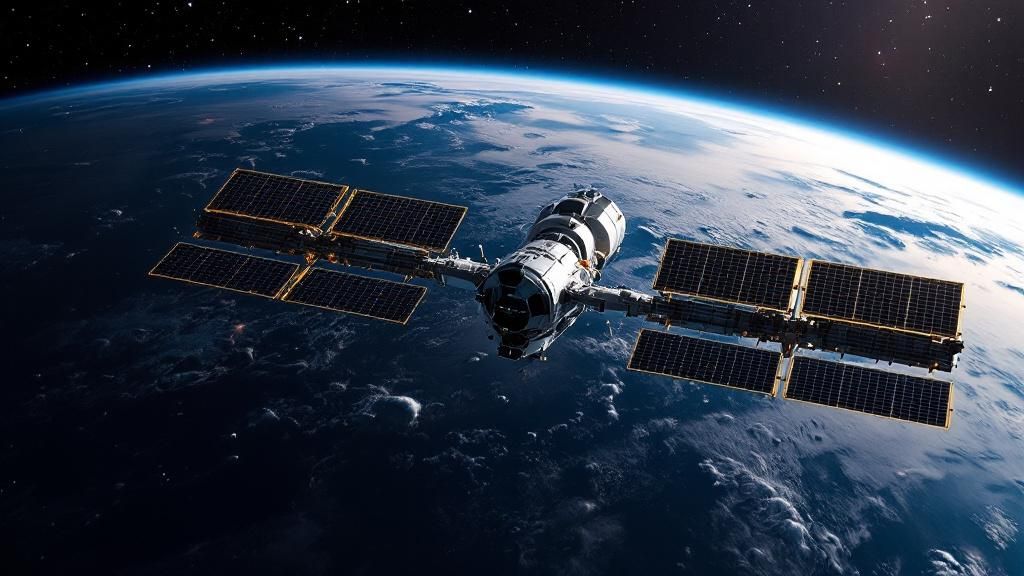
Nasa’s Artemis II mission has successfully entered orbit, representing a significant achievement in humanity’s journey back to lunar exploration. Commander Reid Wiseman, pilot Victor Glover, mission specialist Christina Koch and lunar specialist Jeremy Hansen are currently orbiting Earth approximately 42,500 miles away aboard the newly-crewed Orion spacecraft. The four astronauts blasted off on Wednesday in what constitutes a crucial test flight before humans return to the Moon for the first time since the Apollo era. With the mission’s success hinging on thorough testing of the Orion vessel’s systems and the crew’s ability to operate in the unforgiving environment of space, Nasa is taking no risks as it reasserts America’s position in the global space race.
The Crew’s First Hours in Weightlessness
The opening hours aboard Orion have been carefully planned by Mission Control, with every minute accounted for in the crew’s schedule. Following achieving orbit, pilot Victor Glover began subjecting the spacecraft to thorough tests, pushing the bus-like spacecraft to its limits to ensure it can safely carry humans into deep space. Meanwhile, the crew verified essential life support equipment and became acquainted with their surroundings. Approximately eight hours into the mission, Commander Reid Wiseman contacted mission control requesting the crew’s “comfort garments” — their pyjamas — before the astronauts retreated to the sleeping area for their first rest period in space.
Sleeping in microgravity poses distinctive difficulties that astronauts have to tackle to sustain their physical and mental wellbeing throughout long-duration missions. The crew have to fasten themselves in custom-built suspended sleep systems to avoid drifting whilst asleep, a procedure that takes training and adaptation. Some astronauts report difficulty falling asleep as their bodies acclimate to weightlessness, whilst others note superior sleep experiences in space. The Artemis II crew will sleep approximately four hours at a time, amounting to eight hours over each 24-hour period, enabling Mission Control to preserve their demanding operational schedule.
- Orion’s photovoltaic panels deployed successfully, providing power for the journey
- Life support systems undergoing thorough testing by the crew
- Astronauts use custom-built suspended sleep systems in microgravity
- Crew allocated 30 minutes daily exercise to maintain bone density
Assessing the Orion Spacecraft’s Capabilities
The Orion spacecraft, approximately the size of a minibus, represents humanity’s most sophisticated lunar exploration vessel to date. Pilot Victor Glover has devoted the mission’s crucial initial hours subjecting the craft to exhaustive testing, verifying every system before the crew ventures into the harsh environment of deep space. The deployment of Orion’s solar wings shortly after launch proved successful, providing the essential electrical power needed to maintain the spacecraft’s systems throughout the journey. This meticulous testing phase is absolutely vital; once the crew departs from Earth orbit, there is no direct path back, making absolute confidence in the vessel’s reliability non-negotiable.
Never before has Orion carried human astronauts into space, making this first manned mission an extraordinarily significant milestone in spaceflight history. Every component, from the navigation equipment to the engine systems, must operate without fault under the extreme conditions of space travel. The four-member team methodically work through detailed check-lists, monitoring instruments and verifying that all onboard systems function properly. Their thorough evaluation of Orion’s performance during these opening hours provides Nasa engineers with invaluable data, ensuring the spacecraft is truly mission-ready before the mission progresses further into the cosmos.
Life-Sustaining Systems and Emergency Response Procedures
The crew are performing rigorous tests of Orion’s life support systems, which are absolutely critical for maintaining a breathable atmosphere and stable environmental conditions throughout the mission. These systems control oxygen supply, remove carbon dioxide, regulate temperature and moisture, and keep the crew protected in the unforgiving environment of space. Every monitoring device and failsafe system must operate flawlessly, as any failure could jeopardise the entire mission. Mission Control monitors these systems continuously from Earth, prepared to act swiftly to any irregularities or unusual data that might occur.
Should an emergency occur, the astronauts are supplied with specially-designed extravehicular activity suits capable of sustaining human life for approximately six days in isolation. These sophisticated suits provide oxygen, heat management, and protection from radiation and micrometeorites. The crew have undergone thoroughly trained in contingency procedures and suit operations before launch, ensuring they can respond swiftly to any emergency. This multi-layered safety approach—combining robust onboard systems with crew protection equipment—represents Nasa’s unwavering dedication to crew survival.
Going About Your Day in Microgravity
Life on the Orion spacecraft presents novel obstacles that diverge considerably from life on Earth. The crew must adapt to the absence of gravity whilst maintaining strict schedules that allow for every minute of their assignment. Unlike the Apollo astronauts of the mid-twentieth century, this team benefits from comprehensive broadcasting facilities, allowing the world to witness their work in live. Cameras positioned above the crew’s heads document them reviewing displays, connecting with Mission Control, and executing critical spacecraft functions. This visibility marks a major change in how humanity encounters space exploration, converting what was once a far-removed, secretive undertaking into something real and engaging for millions of spectators worldwide.
Rest Schedules and Exercise Routines
Sleep in the weightless environment demands considerable adjustment. The crew must fasten themselves within specially-designed suspended sleep sacks to avoid floating about the cabin during their rest periods. Mission Control has designated approximately 8 hours of sleep per 24-hour period, divided into two four-hour sessions to sustain alertness and brain function. Commander Reid Wiseman playfully requested his “comfort garments”—pyjamas—before retiring for the crew’s inaugural sleep period. Some astronauts find weightlessness deeply disturbing to sleep patterns as their bodies adapt, whilst others claim to experience their most restorative sleep ever in space.
Physical exercise is absolutely vital for maintaining muscle mass and bone density during prolonged weightlessness exposure. Mission Control has mandated thirty minutes of daily exercise for each crew member, a non-negotiable requirement that protects their physical wellbeing. Commanders Reid Wiseman and Victor Glover tested Orion’s “flywheel exercise device,” a compact apparatus roughly the size of carry-on luggage that enables various forms of exercise. Christina Koch and Jeremy Hansen were designated to utilise the equipment for rowing exercises, squats, and deadlift movements. This demanding exercise programme ensures the astronauts maintain sufficient physical conditioning throughout their mission and remain capable of performing critical tasks.
Catering and Services Aboard
The Orion spacecraft, roughly the size of a minibus, contains restricted yet vital facilities for sustaining human life during the mission. Galley and food storage facilities provide the crew with meticulously chosen meals formulated to satisfy nutritional requirements whilst limiting waste and storage demands. Every item aboard has been thoroughly assessed and validated to ensure it operates effectively in the microgravity environment. The crew’s nutritional requirements are weighed against the spacecraft’s weight constraints and storage capacity, requiring precise logistical management by Nasa’s mission planners and nutritionists.
One especially important concern aboard Orion is the functioning of onboard sanitation facilities. The spacecraft’s toilet system has encountered in the past malfunctions during space missions, raising understandable concerns amongst crew and engineers alike. Nasa engineers have introduced enhancements and backup procedures to avoid comparable issues during Artemis II. The crew receives specific training on operating all spacecraft systems in microgravity conditions, where standard sanitation procedures become significantly more complicated. Ensuring reliable sanitation infrastructure remains an often-overlooked yet genuinely critical component of mission accomplishment and crew wellbeing.
The Crucial Lunar Injection Burn Looms Ahead
As Artemis II progresses through its early orbit around Earth, the crew and Mission Control are gearing up for one of the mission’s most consequential manoeuvres: the lunar injection firing. This precisely calculated engine burn will propel the spacecraft away from Earth’s gravitational pull and establish a course to the Moon. The timing, duration, and angle of this burn are absolutely critical—any miscalculation could undermine the full mission scope. Engineers have spent months modelling every factor, considering fuel consumption, atmospheric conditions, and spacecraft dynamics. The four astronauts will track system performance as they near this critical juncture, knowing that this burn constitutes their threshold beyond which return becomes impossible into deep space.
The lunar injection burn highlights the extraordinary complexity inherent in what might seem like routine spaceflight operations. Mission Control must coordinate data from several tracking facilities, confirm spacecraft systems are functioning optimally, and ensure all crew members are equipped to handle the g-forces they’ll encounter. Once ignited, the Orion spacecraft’s engines will thrust with great intensity, driving the vehicle past Earth’s gravity. This manoeuvre changes Artemis II from an Earth-orbiting mission into a true lunar journey. Success in this phase substantiates years of engineering effort and paves the way for humanity’s journey back to the Moon, making this burn among the most eagerly awaited events in the entire mission timeline.
- Lunar injection burn sends spacecraft out of Earth orbit toward Moon trajectory
- Accurate timing and angle computations are critical for mission success
- Successful burn marks transition to deep space with no straightforward return path
What Awaits Beyond the Moon
Once Artemis II finishes its lunar orbit insertion and breaks free from Earth’s gravitational field, the crew will travel into uncharted territory for human spaceflight in more than five decades. The four astronauts will travel approximately 42,500 miles from Earth, pushing the boundaries of human discovery beyond anything achieved since the Apollo era. This voyage into deep space represents a significant change in humanity’s relationship with space travel—transitioning from missions in Earth orbit to genuine lunar voyages where rescue options become extremely restricted. The Orion spacecraft, never before flown with humans aboard, will be thoroughly tested in the harsh environment of the deep space environment, where exposure to radiation and solitude present new and difficult obstacles for the contemporary astronauts.
The operational outline calls for the spacecraft to swing around the Moon in a high retrograde trajectory, allowing the crew to encounter lunar gravity’s pull whilst maintaining a secure separation from the lunar surface. This precisely calculated trajectory enables Nasa to gather vital measurements about Orion’s operational efficiency in deep space whilst keeping the astronauts in range of contingency rescue efforts, albeit with significant difficulty. The crew will conduct research measurements, assess life support systems at critical limits, and compile information that will guide future piloted lunar operations. Every moment beyond Earth’s protective magnetosphere contributes essential insights to humanity’s sustained objectives of developing sustainable lunar exploration and eventually travelling to Mars.
